
Elephantech Develops SAphire™ D, A Bonding Paste for Next-Generation Power Semiconductors
Low-Temperature Sintering Copper Nanopaste Enabled by Self-Assembling Copper Nanoparticles
Elephantech Inc. today announced the successful development of SAphire™ D, a low-temperature sintering copper nanopaste, based on its proprietary Self-Assembling Copper Nanoparticles (SA-CuNP) technology. The new paste is designed for next-generation power semiconductor die attach process.
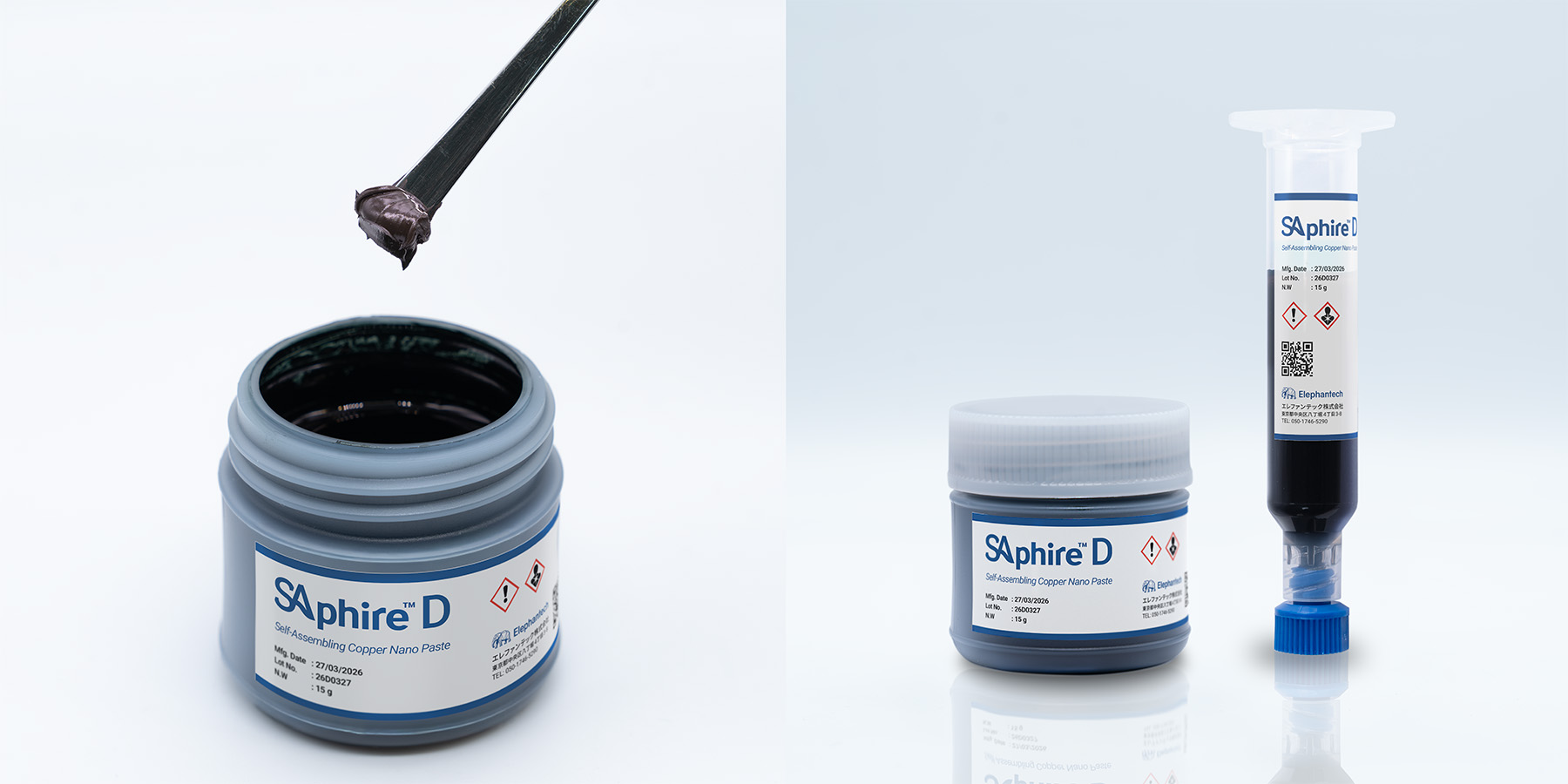
SAphire™ D is a copper nanopaste leveraging a novel mechanism: when coated with nanoscale copper particles, micron-scale copper particles1 behave like “large nanoparticles” and sinter at low temperatures. Despite consisting primarily of micron-scale particles, with an exceptionally low addition of 10 wt% nanoparticles, the material delivers a high bonding strength exceeding 40 MPa at sintering temperature of 250 ℃, along with a low electrical resistivity of 6.4 μΩ·cm.
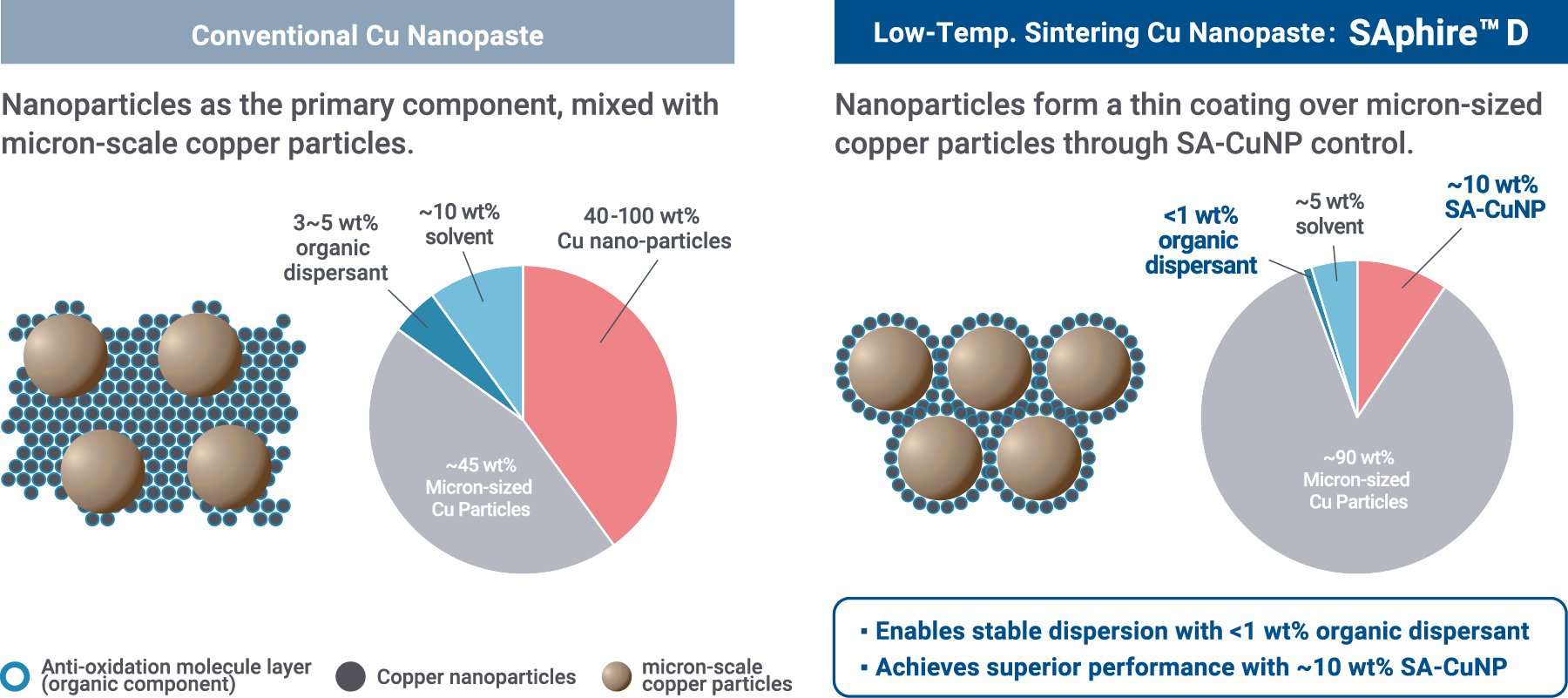
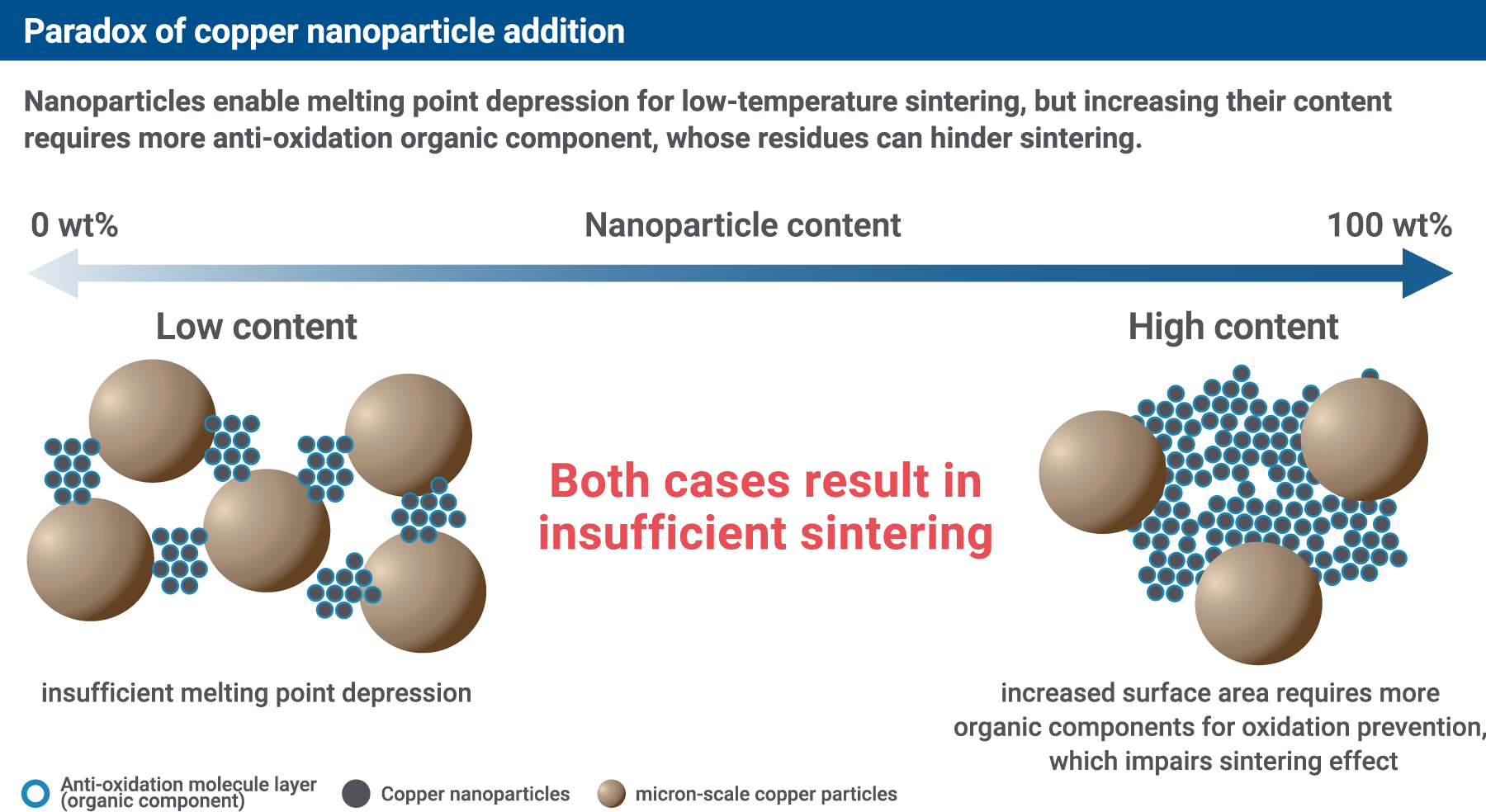
Comparison of SAphire™ D and conventional copper nanopaste design
SAphire™ D will further expand the application of Elephantech’s core nanomaterials technology, accelerating the company’s development beyond its low-environmental-impact printed circuit board (PCB) business, into rapidly growing fields such as semiconductor packaging and AI computing.
Background
To date, solder has been the mainstream option for bonding power semiconductor chips to thermal management substrates. However, as semiconductor devices continue to evolve toward high power and high heat generation, solder materials’ limitations, including the risk of remelting and insufficient heat dissipation due to low thermal conductivity, have become major issues.
As an upgraded solution to overcome the constraints, sintering bonding materials are being explored for high-power semiconductor packaging. These materials provide stable joints without the risk of remelting at high temperatures, as well as lasting strong bonding and excellent thermal conductivity.
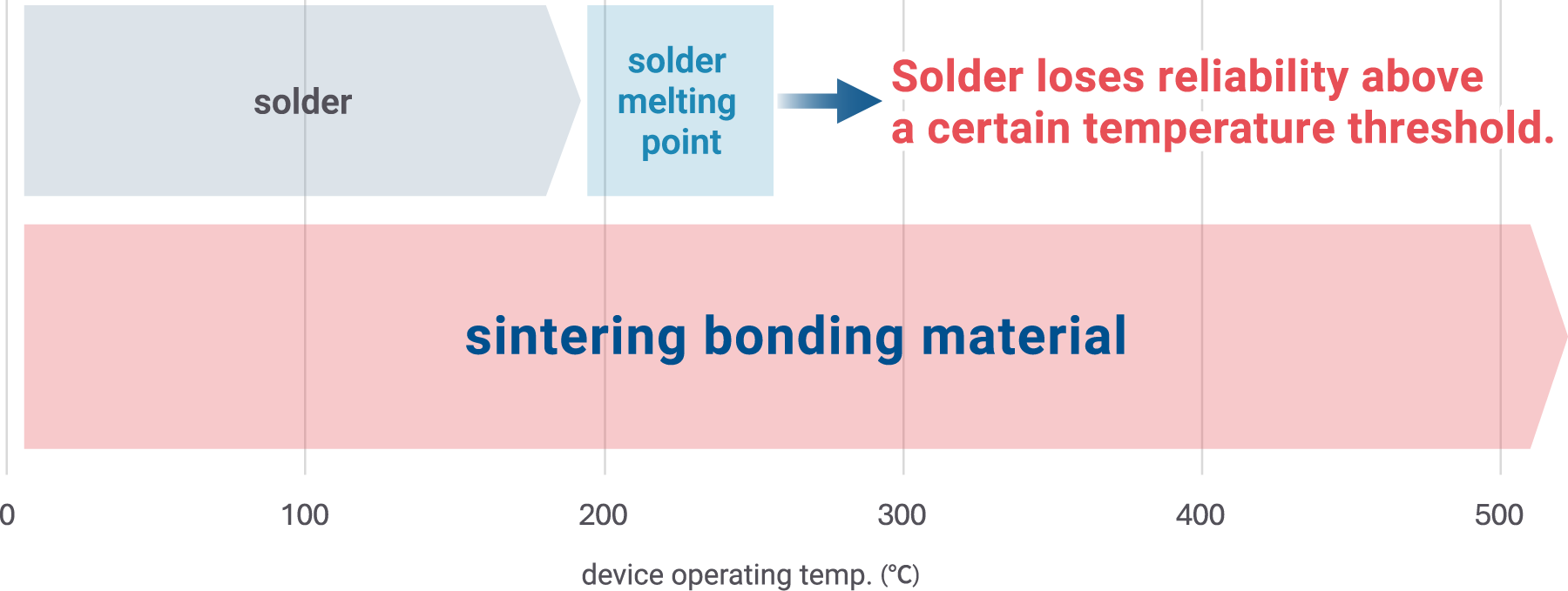
Power semiconductors’ high operation temperature is driving the need for sintering bonding materials
In the application of sintering bonding materials, leveraging nanomaterials to lower melting temperature is a promising approach, with silver nanoparticle pastes studied as a leading solution. When reduced to the nanoscale, silver with original melting point of 961 ℃ can be processed into a paste that sinters at around 200 ℃. Furthermore, once sintered, the material can withstand high temperature without remelting until reaching around 961 ℃ again.
However, because these materials consist almost entirely of silver, they have been confined to limited applications due to the cost. The surging price of silver in recent years has further constrained the material from being broadly adopted. As a result, copper nanoparticle pastes, which cost merely about one percent of silver, have shown bright prospects.
Admittedly copper presents its own challenges such as prone to oxidation and more difficult to sinter at low temperatures, compared to silver. As nanosizing is required to achieve depressed melting point, it increases the particles’ surface area, making them more easily oxidized. If organic molecules are applied in large amounts to prevent oxidation, it in turn impedes sintering, creating a “copper nanoparticle paradox”. Alternatively, micron-sized copper particles are less prone to oxidation due to their larger size, but they do not exhibit melting point depression, making low-temperature sintering unfeasible.
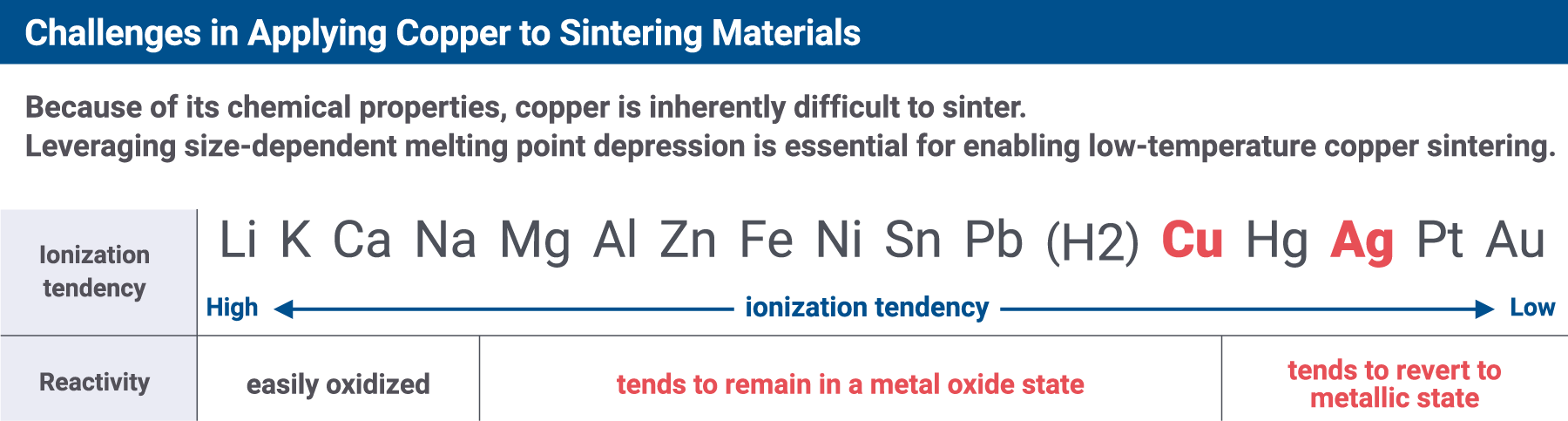
Technological Breakthrough
To address the above paradox, Elephantech has developed SAphire™ D based on a novel low-temperature sintering mechanism: a copper nanoparticle coating is formed over the micron-scale particles, enabling them to behave like “large nanoparticles” and achieve low-temperature sintering. The material leverages the self-assembly behavior of copper nanoparticles and demonstrates the below features.
1. Low-temperature sintering of micron-scale copper particles enabled by SA-CuNP
- Conventionally, micron-scale copper particles are less costly but difficult to sinter at low temperatures.
- Via SA-CuNP technology, merely 10 wt% composition of nanoparticles in the copper sintering paste will enable successful coating over the micron-scale particles.
- As the coated micron-scale particles show behaviors like “large nanoparticles”, despite 90% of the metal content remaining at micron level, it shows high sinterability from around 200 ℃.
2. Paste with high metal content with minimized load of organic dispersants
- Pastes with nanoparticles as the main component generally require addition of several percent of organic dispersants to maintain stable dispersion.
- By minimizing the nanoparticles content and equipping them with SA-CuNP control, less than 1 wt% of dispersant usage can create uniform, stable dispersion while maintaining high metal content.
- This enables both high metal loading and stable dispersion in the paste.
The technology is built on Elephantech’s SA-CuNP technology, announced in December 2025. (link)
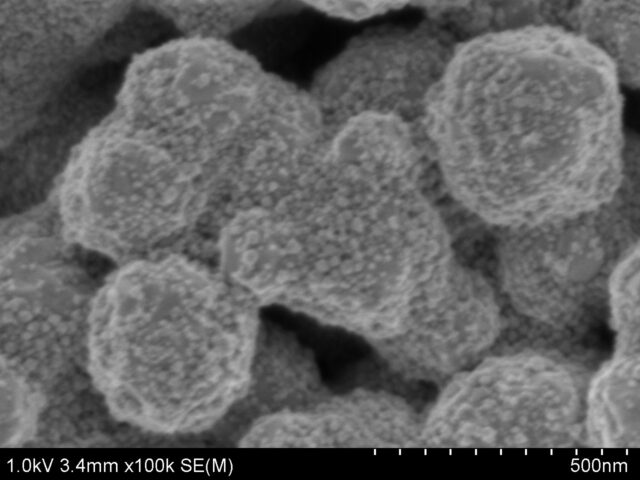
SEM image capturing the self-assembly behavior of SA-CuNP
Product Advantages
Leveraging the SA-CuNP technology, SAphire™ D, the low-temperature sintering copper nanopaste offers the following strengths as a sintering bonding material:
1. High bonding strength and low electrical resistivity
- Achieves bonding strength exceeding 40 MPa under pressure at 250 ℃ for copper-to-copper joints.
- Delivers bonding strength above 25 MPa at 200 ℃ under pressure.
- Exhibits low electrical resistivity of 6.4 μΩ·cm without applied pressure.
2. Outstanding cost competitiveness and application versatility
- The minimal use of nanoparticles helps control manufacturing cost.
- In addition to the die attach application, the material is also applicable to heat dissipation solutions such as large-size TIM2.
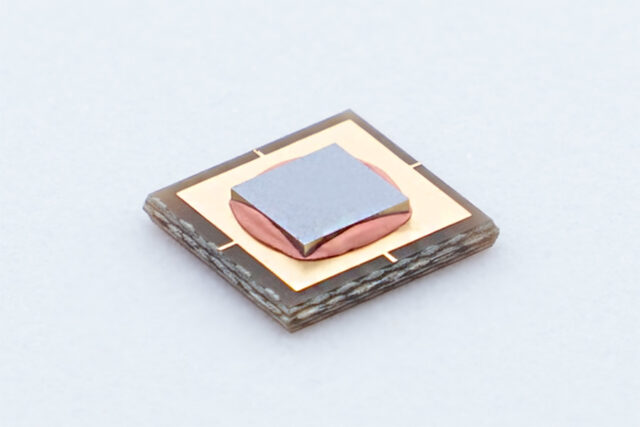
SAphire™ D die attach sample
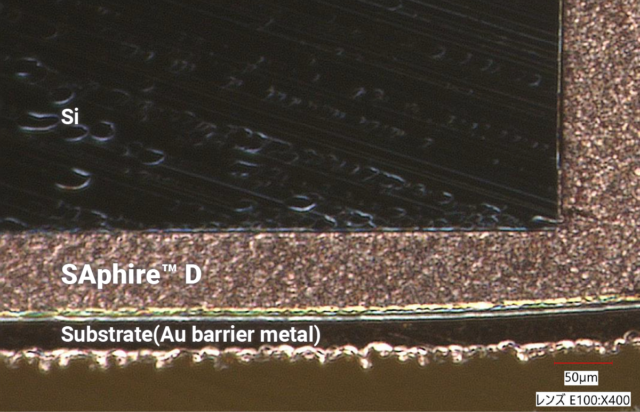
Cross section of Cu chip×SAphire D×substrate die attach interface
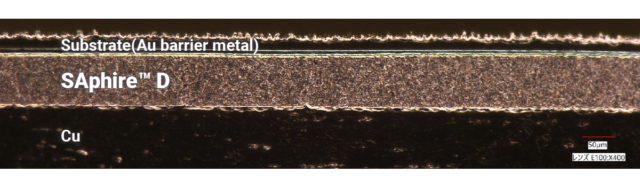
Cross section of Cu chip×SAphire D×substrate heat dissipation interface
Future Outlook
SAphire™ D, the low-temperature sintering copper nanopaste, is already undergoing sample evaluation for both die attach and TIM applications with globally leading power semiconductor manufacturers. Elephantech will accelerate efforts toward its adoption in mass production processes.
To keep up the momentum, the company will continue to fully unlock the power of its nanomaterials innovations, addressing the major technological challenges in the AI era, under the theme “Nanomaterials Powering AI Computing”.
1. Micron-scale particles are defined as particles with a diameter of approximately 0.4 μm or larger.
2. TIM = Thermal Interface Material
| Name | Elephantech Inc. |
| Establishment | January 2014 |
| Headquarter | 4-3-8 Hatchobori, Chuo-ku, Tokyo 104-0032, Japan |
| Representative | Shinya Shimizu, Representative Director & CEO |
| Business Description | Development, manufacturing, and sales of proprietary equipment and materials, and PCB products. |
| URL | https://elephantech.com/en/ |
Elephantech Inc. Public Relations: pr@elephantech.co.jp