Sustainability
SustainaCircuits demonstrates that technological innovation and environmental performance can advance together. Every adoption of SustainaCircuits moves the electronics industry one step closer to achieving the net-zero goals.
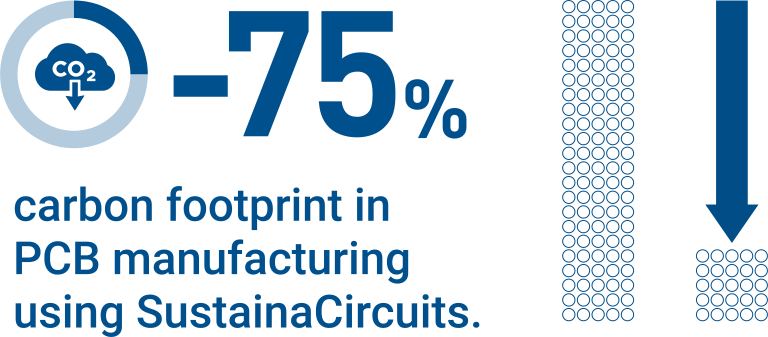
Our Environmental Footprint in Figures
SustainaCircuits CO2 Emissions Comparison
Calculation specification: 6-layer rigid PCB with board thickness of 0.8 mm and copper thickness of 35 µm [unit: kg-CO2eq/m2]
| Item | Conventional Process | SustainaCircuits | Reduction | Reason | ||
|---|---|---|---|---|---|---|
| Material | Base material | 33.8 | 12.2 | -21.6 | -63.9% | SustainaCircuits uses unclad laminate without copper foil. |
| Copper plating | 7.5 | 2.0 | -5.5 | -73.6% | •Electroless copper plating eliminated. •Electrolytic plating required only for pattern formation. | |
| DES steps | 11.5 | 0.0 | -11.5 | -100.0% | DES (Developing, Etching, Stripping) process eliminated | |
| Elephantech unique steps | 0.0 | 4.6 | +4.6 | Minor increase due to primer coating, inkjet printing and reduction. | ||
| Other | 2.0 | 1.1 | -0.9 | -45.0% | Dry film process eliminated; other steps such as solder resist remain unchanged. | |
| Subtotal | 54.8 | 19.9 | -34.9 | -63.7% | Significant reduction in copper usage and consumables by eliminating DES. | |
| Energy | 58.5 | 18.3 | -40.2 | -68.7% | Process simplification results in significant energy savings, including air conditioning. | |
| Wastewater/waste treatment | 48.0 | 2.2 | -45.8 | -95.4% | Elimination of DES greatly reduces wastewater and chemical treatment. | |
| Transportation | 6.9 | 1.8 | -5.1 | -74.4% | Less material use contributes to lower transportation related footprint. | |
| Total | 168.2 | 42.2 | -126.0 | -74.9% | ||
・Results are derived from in-house analysis and have been cross-checked through industry expert primary interviews.
・Depending on board design, the overall carbon footprint reduction may vary.
・Reference: Winco K.C. Yung, Subramanian Senthilkannan Muthu, Karpagam Subramanian, Chapter 13 - Carbon Footprint Analysis of Printed Circuit Board, Editor(s): Subramanian Senthilkannan Muthu, Environmental Carbon Footprints, Butterworth-Heinemann, 2018, Pages 365-431, ISBN 9780128128497, https://doi.org/10.1016/B978-0-12-812849-7.00013-1.
Water Consumption Reduction
Sample specification: rigid printed circuit Background color: light blue - processes that use chemical agents, gray - wastewater treatment processes that do not use chemical agents
Conventional manufacturing method
| Major item | Process | Waste liquid |
|---|---|---|
| Starting material | CCL | Omit the waste liquid in CCL production |
| Drilling process | Via drilling | |
| Washing | Wastewater | |
| Catalyst addition | Cleaner | Alkaline waste liquid |
| Washing | Alkaline waste liquid(weak) | |
| Soft Etching | Heavy-metal acid waste liquid (contains Cu) | |
| Washing | Acid waste liquid(weak) | |
| Predip | Acid waste liquid | |
| Add palladium catalyst | Acid waste liquid, Recovery | |
| Washing | Acid waste liquid(weak) | |
| Electroless Cu | Accelerator | Sn, Acid waste liquid (Pd contain) |
| Washing | Acid waste liquid(weak) | |
| Electroless Cu | Heavy-metal acid waste liquid (contains Cu) | |
| Washing | Alkali waste liquid(weak) | |
| Drying | ||
| Electrolytic Cu | Cleaner | Acid waste liquid |
| Washing | Acid waste liquid(weak) | |
| Predip | Acid waste liquid | |
| Electrolytic Cu | *None since it is circulated | |
| Washing | Acid waste liquid(Cu contain) | |
| Rust prevention | Alkaline waste liquid(weak) | |
| Washing | Alkaline waste liquid(weak) | |
| Drying | ||
| DF | Soft Etching | Acid waste liquid(Cu contain) |
| Washing | Acid waste liquid(weak) | |
| Drying | ||
| DF laminate | ||
| Exposure | Exposure | |
| DES | Developing | DFR, Alkali waste liquid |
| Washing | Alkali waste liquid(weak) | |
| Etching | Acid waste liquid, Recovery | |
| Washing | Acid waste liquid(weak) | |
| Stripping | DFR, Alkali waste liquid | |
| Washing | Alkali waste liquid(weak) | |
| Drying |
SustainaCircuits manufacturing method
| Major item | Process | Waste liquid |
|---|---|---|
| Starting material | Unclad substrate | |
| Primer coating | Coating | |
| Curing | ||
| Drilling process | Via drilling | |
| Washing | Wastewater | |
| Printing | Printing | |
| Drying | ||
| Reduction | Circulation washing | ※No regeneration |
| Reduction | ||
| Electrolytic Cu | Cleaner | Heavy-metal acid waste (contains Cu) |
| Water Rinse | Acid waste liquid(weak) | |
| Predip | Acid waste liquid | |
| Electrolytic Cu | ※No regeneration | |
| Water rinse | Heavy-metal acid waste (contains Cu) | |
| Anti-tarnish | Alkaline waste (weak) | |
| Water rinse | Alkaline waste (weak) | |
| Drying |
Our SDG Contributions
Aligned with the Sustainable Development Goals (SDGs), our technology contributes most directly to the following priority areas:
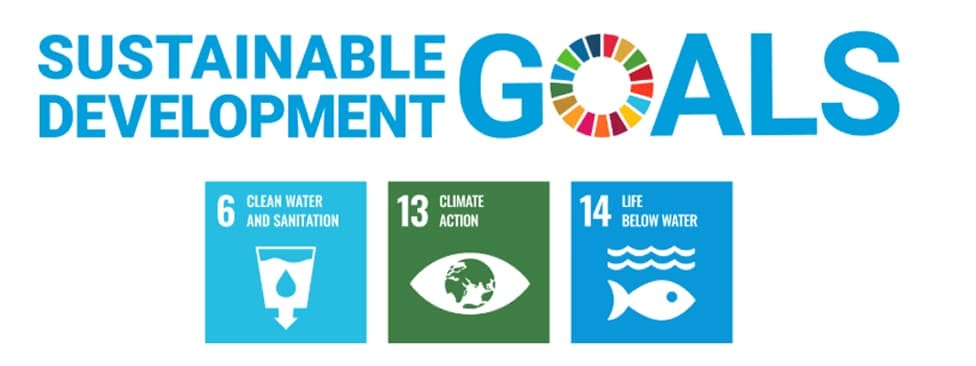
- Goal 6. Clean water and sanitation
- Goal 13. Climate action
- Goal 14. Life below water
SustainaCircuits minimizes wastewater, hazardous byproducts, and GHG emissions compared to conventional PCB manufacturing. These improvements enhance resource efficiency and advance a more circular, sustainable electronics industry.