
Elephantech Has Developed SAphire™ D02, A Copper Nano-paste for Pressureless Die Attach in Power Semiconductors Advancement of its Low-Temperature Sintering Technology Enables Greater Process Flexibility
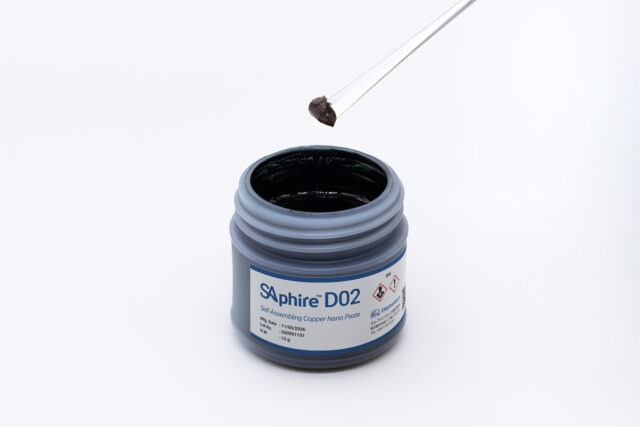
Elephantech announces the development of SAphire™ D02, a new addition to its SAphire™ low-temperature sintering copper nano-paste lineup, designed for pressureless die attach applications.
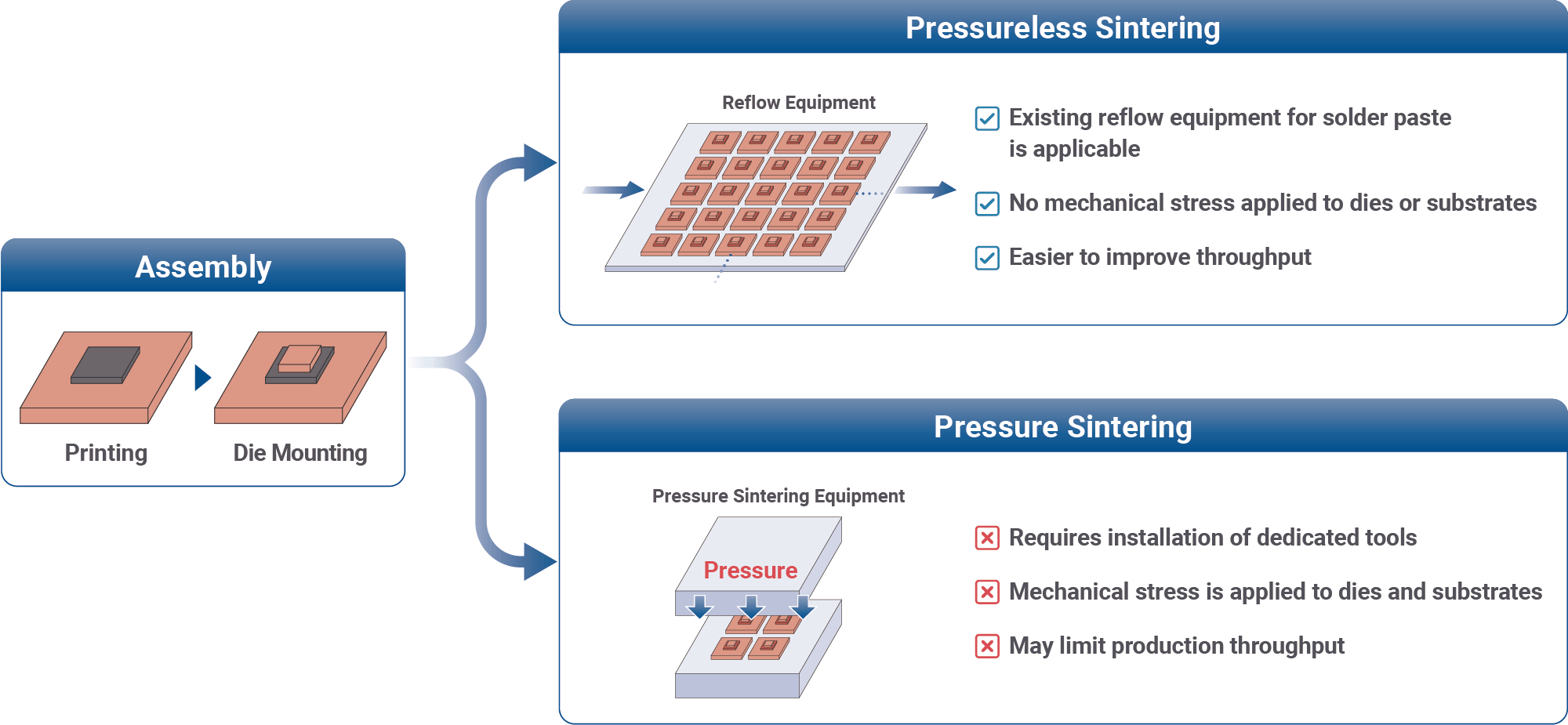
Conventionally copper sintering pastes require pressure-assisted bonding to achieve strong bonding during semiconductor die attachment. In contrast, SAphire™ D02 has demonstrated sufficient bonding strength under pressureless conditions, removing the need for a pressurization step during the process.
The advancement significantly enhances manufacturing process flexibility and addresses thermal management issues in the power semiconductor field, including not only die attach but also Thermal Interface Materials (TIMs).
Background
Solder has been widely used as a die-attach material to connect power semiconductor chips with heat-dissipation substrates. However as semiconductor devices continue to deliver higher power output and generate greater heat, solder faces increasing heat management challenges, including remelting risk and insufficient heat dissipation due to its low thermal conductivity. Therefore sintering bonding materials are emerging as an alternative solution for high-power semiconductors, which can eliminate the remelting risk even at high operating temperatures, maintain robust bonding over time and provide high thermal conductivity.
To address these needs, Elephantech released SAphire™ D, a low-temperature sintering copper nano-paste for die attach applications, in March 2026. Employing the company’s proprietary Self-Assembling Copper Nanoparticles technology, the material accomplishes low-temperature sintering despite containing exceptionally small amounts of copper nanoparticles.
The next development target for copper nano-pastes used in die attach is pressureless compatibility. The mainstream low-temperature sintering die-attach processes using copper nano-paste require pressure-assisted processes to achieve sufficient bonding strength. Elephantech’s previously announced copper nano-paste SAphire™ D is also based on the same premise.
With pressure-assisted bonding used as the common production practice, it is generally considered preferable to reduce the reliance on pressurization to broaden the process window. Accordingly, Elephantech has been developing copper nano-paste for pressureless sintering, in parallel with its pressure-assisted sintering materials. The successful development of SAphire™ D02 marks a new material capable of achieving high bonding strength under pressureless conditions.
■ Process comparison between pressureless vs. pressure-assisted sintering
SAphire™ D02 Performance
The latest innovation extends SAphire™ D’s technology platform by enabling sintering network formation between copper particles under pressureless conditions. The material is engineered to efficiently create sintering initiation sites between copper particles, facilitating the formation of dense sintered structures both at the bonding interface and throughout the paste without relying on external pressure.
The graphs below show the comparison between bonding results of SAphire™ D01, the previously released pressure-assisted copper nano-paste, and SAphire™ D02, the newly formulated, pressureless-compatible material, across Cu to Cu substrate and Ti/Au-finished Si dies to Cu substrate tests, both under the conditions of pressureless, 60-minute sintering.
Focusing on the Si/Ti/Au-Cu results in Fig. 1, SAphire™ D01 shows a shear strength of only 1.6 MPa at 250 °C, whereas SAphire™ D02 has demonstrated significantly improved values under the same conditions. Benchmarking against the bonding strength of solder, at around 20 MPa, SAphire™ D02 reaches the same level under pressureless sintering at 200 °C for Cu-Cu and 250 °C for Si/Ti/Au-Cu.
In addition, Fig. 2 shows that sufficient bonding strength is achieved under pressureless sintering in an N2 atmosphere, without the use of formic acid by elevating the temperature to 280 °C.
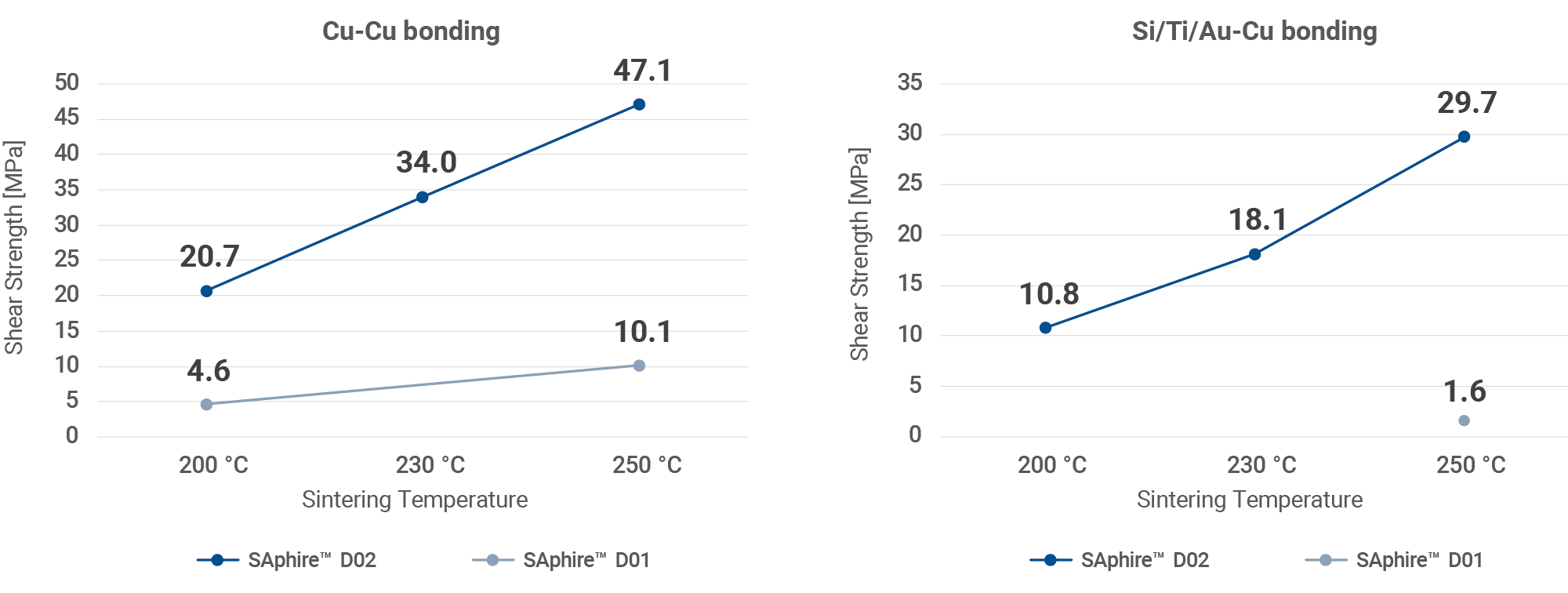 Fig. 1: Shear strength under pressureless sintering (in formic acid atmosphere)
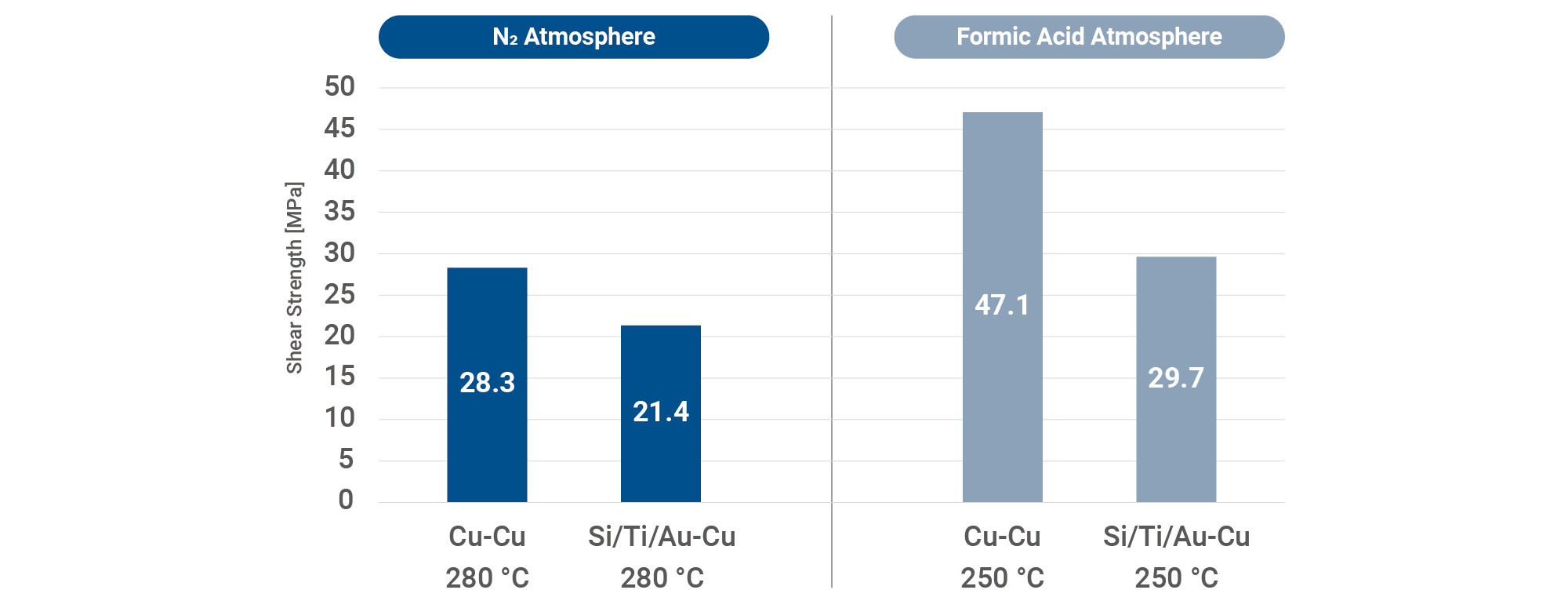 Fig. 2: Pressureless sintering performance under N2 and formic acid atmosphere
■ Pressureless Sintering Process Flow

Technical Breakthrough of Pressureless Bonding
Power semiconductor die attach
By simplifying the manufacturing process through pressureless sintering, die-attach pastes will see wider and easier adoption. Solder as conventional die-attach material on the one hand as stated above suffers from their thermal performance, on the other enables simple process flow without pressure as they relatively easily melt to bond. Although sintering pastes offer significant performance advantages, their adoption is often held back by the need for the investment in pressurization equipment and fixtures, restricting their applicability.
By overcoming one of the key limitations associated with sintering copper nano-pastes, namely the necessity for pressurization during bonding, SAphire™ D02 is expected to become a diverse copper nano-paste solution that can be deployed across a wide range of applications.
Power semiconductor TIM
In power semiconductor packaging, not only die attach between semiconductor chips and substrates, TIMs used to bond substrates and heat dissipation plates also play a critical part.
As die attach is relatively easy to handle due to its small size matching the chip, TIM bonding areas between substrates and heat dissipation plates are significantly larger, making it difficult to apply strong pressure evenly, raising a stronger demand for TIMs applications’ pressureless capability.
For instance, for a pressure-assisted production process that requires a bonding condition of 20 MPa, the force applied to the 5 mm square die attach is 500 N (approximately 51 kg), while the force for a 50 mm square TIM will be 50 kN (approximately 5.1 tons).
By enabling low-temperature pressureless bonding using copper nano-pastes, this technology facilitates the adoption of sintering bonding materials for power semiconductor TIM applications, contributing to improved power semiconductor performance.
Outlook
The SAphire™ D series of low-temperature sintering copper nano-paste has entered sample evaluation with leading global power semiconductor manufacturers for die attach and TIM applications. Building on the latest breakthrough, Elephantech will accelerate its adoption in mass production.
Furthermore, Elephantech’s copper nano-paste family SAphire™ effectively tackles thermal challenges, one of the most critical bottlenecks in the advancement of semiconductors. Going forward, the company will continuously help to improve device performance across multiple bonding interfaces within power modules, as well as electronics components, optical devices, and AI computing-related devices requiring high thermal dissipation and heat resistance.
Inquiries
Sales Unit, Inkjet Equipment and Material Business Department, ElephantechCompany Overview
| Name | Elephantech Inc. |
| Establishment | January 2014 |
| Headquarters | 4-3-8 Hatchobori, Chuo-ku, Tokyo 104-0032, Japan |
| Representative | Shinya Shimizu, Representative Director & CEO |
| Business Description | Development, manufacturing, and sales of proprietary equipment and materials, and PCB products. |
| URL | https://elephantech.com/en/ |
Elephantech Inc. Public Relations: pr@elephantech.co.jp